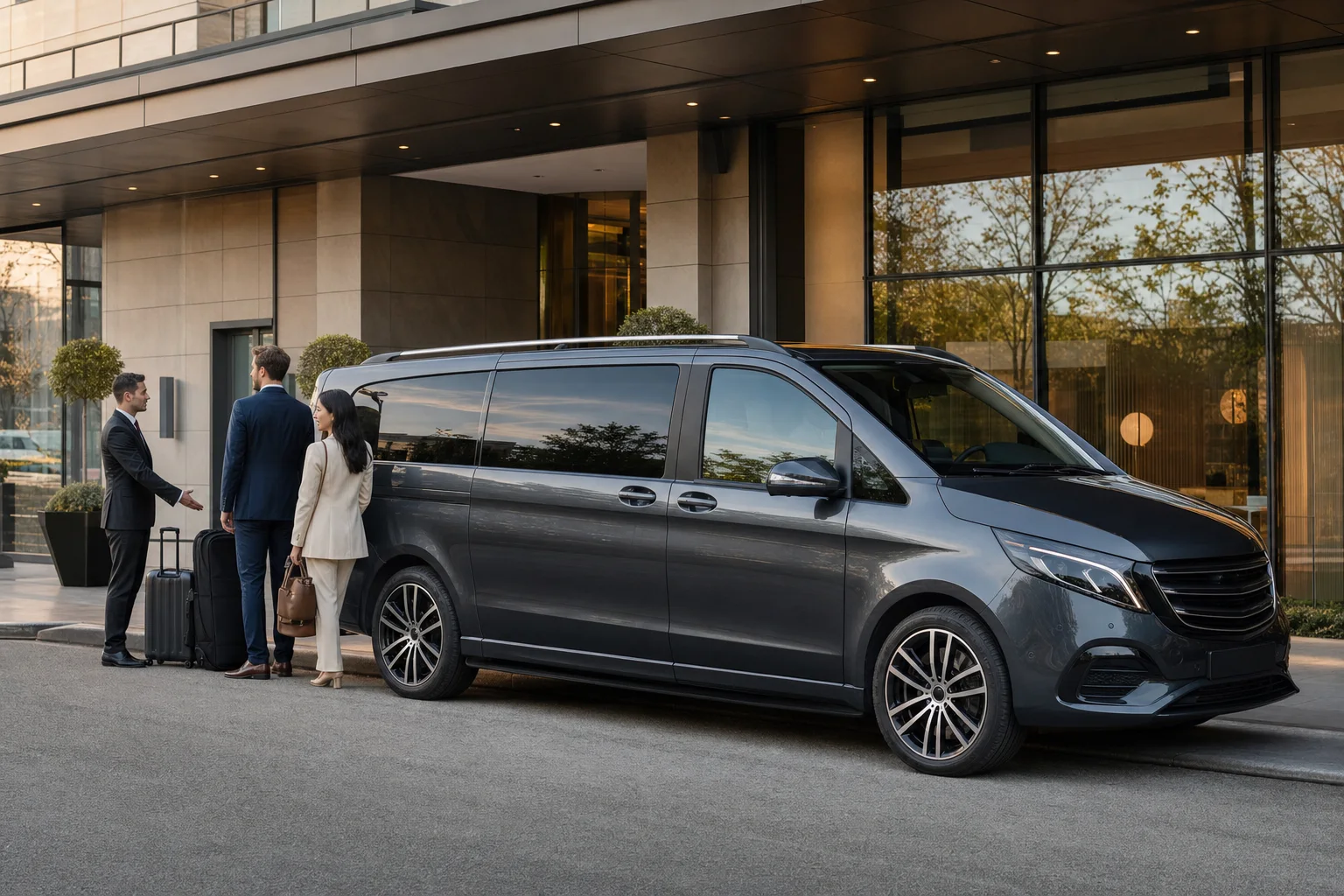
Passenger count is only the first number
A transport planner also needs suitcase counts, bulky equipment, children, mobility requirements, pickup points and the desired arrival time. The same number of people can require very different vehicle arrangements.
Create practical passenger groups
Group passengers by shared flight, hotel or schedule. If half the team has an early appointment and the rest arrives later, one large vehicle may create more waiting rather than less.
- Families and companions travelling together
- Colleagues sharing the same hotel and programme
- Speakers or executives with separate timings
- Equipment handlers or production staff
- Passengers with accessible-travel requirements
Choose pickup points carefully
Several door-to-door pickups can lengthen a group movement. An agreed central pickup may simplify coordination, but only if every passenger can reach it comfortably and safely. Share the proposed addresses and let the final offer explain the plan.
Do not assume published capacities
Vehicle seating and luggage capacity depend on the specific vehicle and configuration. This website intentionally avoids unconfirmed figures. Ask for the actual capacity and luggage plan in the offer.
Keep the return journey visible
Groups often focus on arrival and leave departure until later. Include venue-to-hotel, dinner, airport and split-return movements at the start so availability and coordination can be assessed together.
Sources and verification
Official sources used to verify stable facts in this guide:
- EXPO 2027 Belgrade — official event overview EXPO 2027 Belgrade · checked 25 July 2026
- EXPO 2027 Belgrade — official programme EXPO 2027 Belgrade · checked 25 July 2026
- Belgrade Airport — public transportation Belgrade Nikola Tesla Airport · checked 25 July 2026